What Turns You On? Pleasure Priorities Results Revealed

Jump To Section
The 2026 first annual Pleasure Priorities Survey result are In and wow our community had thoughts. We asked you what turns you on and oh boy did you deliver!
The Pleasure Priorities Survey is our anonymous, judgment-free check-in on how people are really feeling about pleasure, intimacy, and curiosity as we step into a new year. From sexual bucket lists and newly unlocked interests to confidence gaps and “is this normal?” moments — nothing was off the table.
Over the past few weeks, ya'll shared what’s been turning you on, holding you back, and helping you feel more connected, informed, and empowered in your pleasure journeys. And now? We’re sharing those insights back with you, fully anonymous, thoughtfully curated, and laid out so you can feel empowered about your pleasure journey!
These results help us:
Normalize curiosity, uncertainty, and change around pleasure
Remind you that you’re definitely not alone
Spotlight shared desires, challenges, and pleasure trends within our community
Most importantly, this feedback directly shapes the education, resources, and workshops we create next, so we can support safer, more intentional, and more confident pleasure in real, practical ways. You could say, knowing what turns you on, turns us on... but not in a creepy way!
So lets jump in!
Personal Identity
This section was all about how respondents identify in regards to sexuality, gender relationship status.
Sexual Orientation?
We asked for participants sexual orientation and we were stoked to see just how diverse our community is!
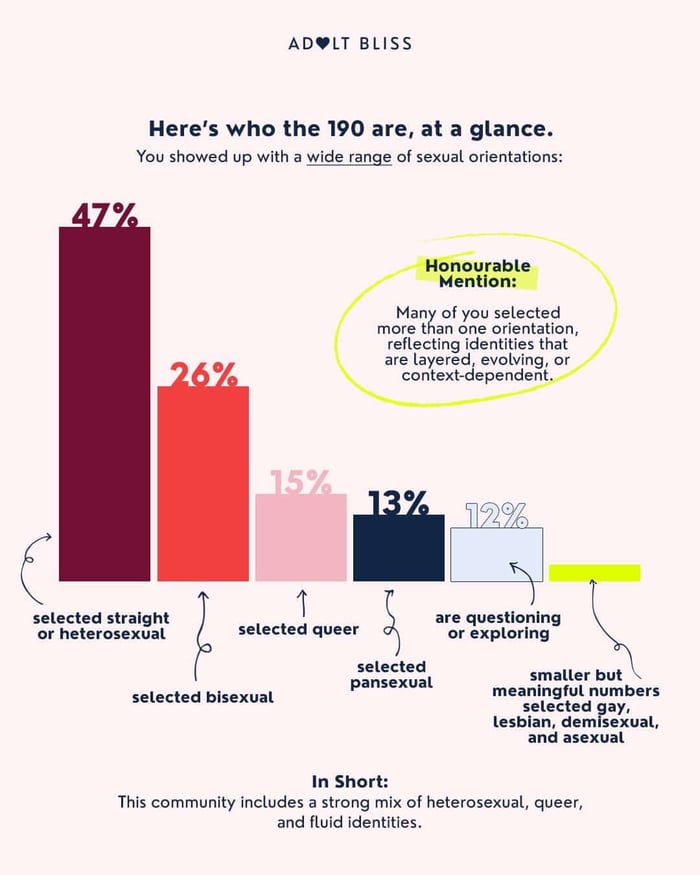
There were also some honourable mentions we absolutely loved. One respondent perfectly summed up their experience as “cis-het but bad at it” — honestly, iconic.
Beyond that gem, a few identities popped up in smaller but still meaningful numbers:
- Asexual: 2.1%
- Demisexual: 7.2%
- Lesbian: 2.6%
- Hetero-flexible: 2%
And can we get some love for our bi baddies? 💖💜💙
Coming in strong at 26%, bisexual folks showed up in a big way. As a group that’s often under-reported (and frequently misunderstood), seeing that level of representation genuinely warmed our souls.
Gender
This was honestly incredible surprising, our Instagram metric consistently show our audience as being close to 70% women, unfortunately and unsurprisingly Instagram isn't very progressive with their gender metrics. To see cis-men out in force here with a 53% is incredible. It's nice to know im not the only cis -man in SA taking Pleasure Priorities seriously!
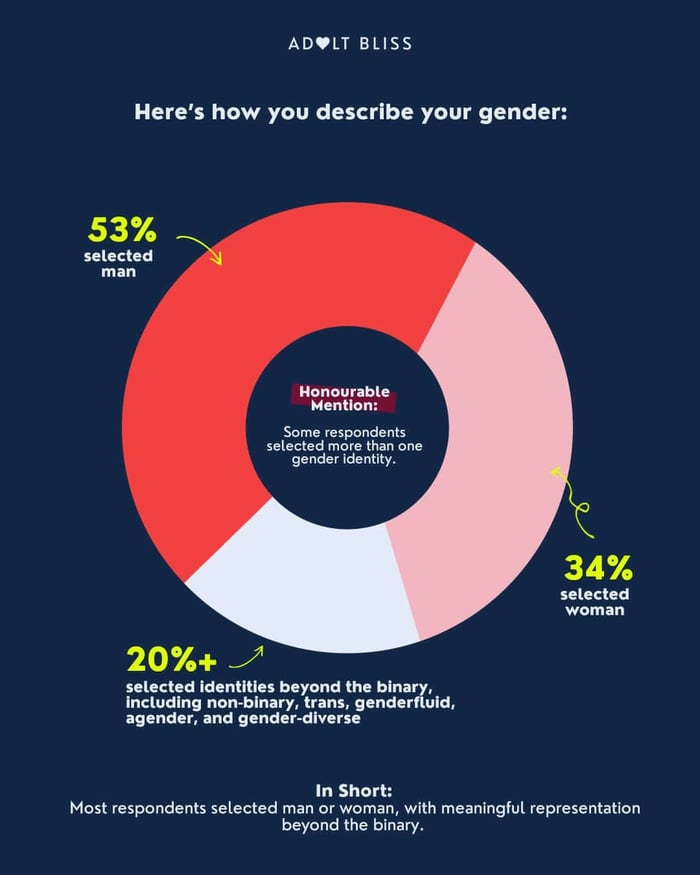
Our community showed up across a wide range of gender identities, with respondents identifying as:
Non-binary: 9.3%
Gender Diverse: 2.6%
Agender: 1.5%
Trans women: 2.6%
Trans men: 4.1%
Intersex: 0.5%
Seeing this level of gender diversity reflected in the data matters. It tells us that people across the gender spectrum feel safe enough to show up honestly, and that’s exactly the kind of space we’re committed to holding.
Relationship status
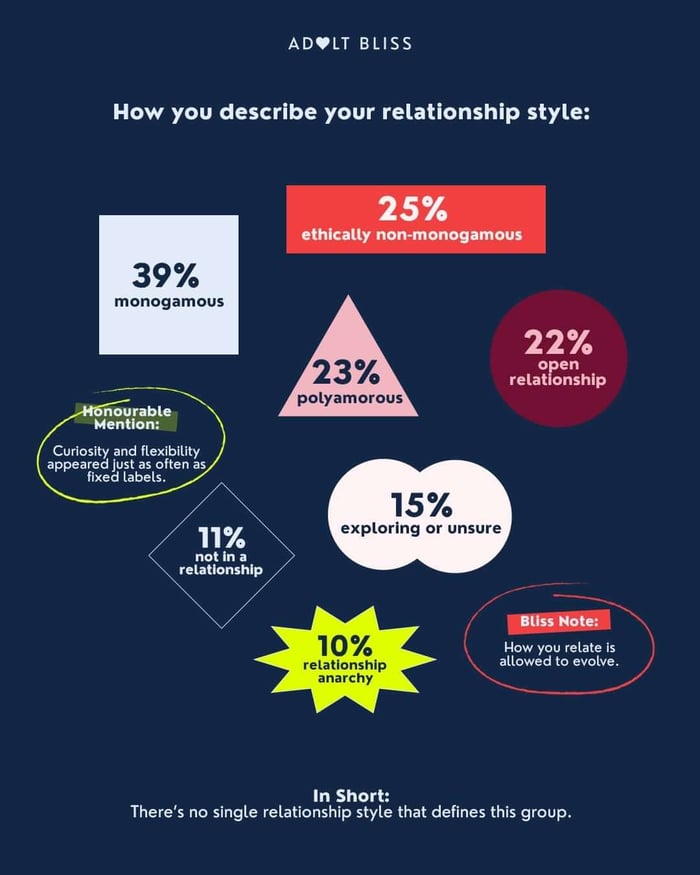
OMG, look at y'all go!
With only 39% identifying as monogamous, this was a huge surprise compared to national stats, and honestly? We love seeing people choose the relationship style that genuinely works for them.
It was also incredibly affirming to see Ethical Non-Monogamy, Open Relationships, and Polyamory taking up some of the top spots. The diversity here tells us one thing loud and clear: there’s no single “right” way to do connection, and living you best live is what turns you on!
And a special shout-out to the 15% who said they’re exploring or unsure, we love this energy. No labels, no pressure, just doing what feels right in the moment. Exploration is a core part of being human, and making space for that curiosity is something worth celebrating.
Keep questioning. Keep experimenting. Keep choosing what feels good (and ethical).
Current Pleasure Priorities
This section focuses on how respondents see they connect to their sexuality and there pleasure priorities for their pleasure historically!
Sexuality Connection
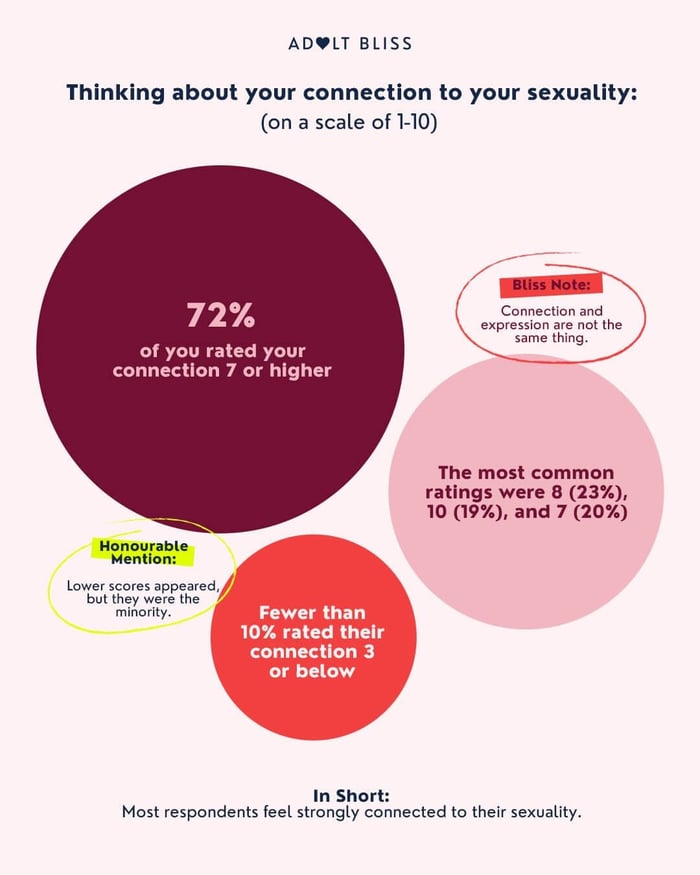
Lets break this one down a little, so in response to this question we can an our of 10 answer;
- 19.6% answered 10
- 9.8% answered 9
- 23.2% answered 8
- 20.1% answered 7
- 10.8% answered 6
- 7.2% answered 5
- the rest were below 5 pretty evenly
This strongly suggest to us that ya'll feel connected to you sexuality and that its a priority for you!
Pleasure As A Priority
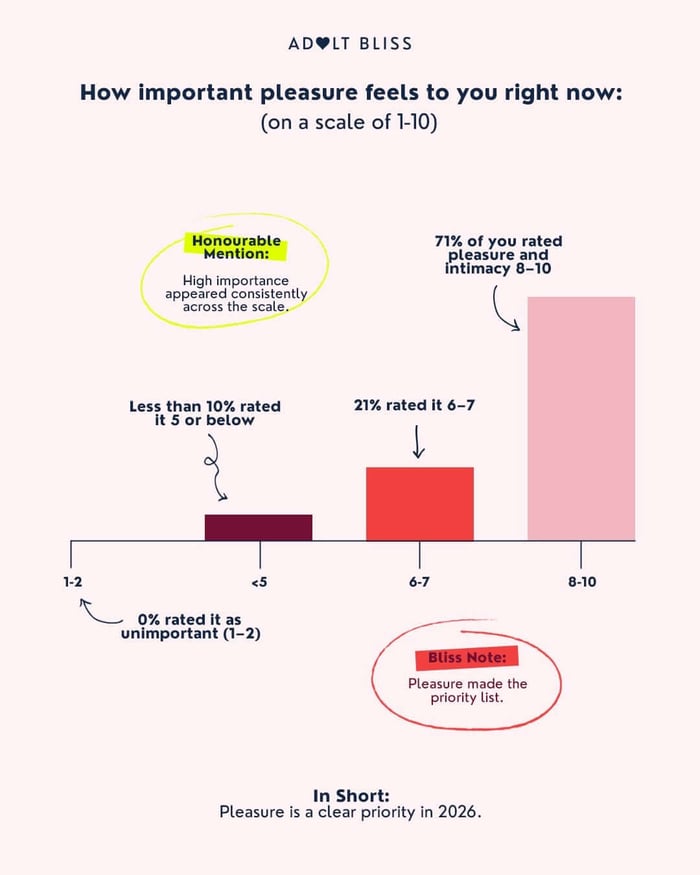
This is an amazing response, we genuinely love to see it. You folks are clearly locked in and prioritizing pleasure 👏
Sexual pleasure is a huge part of human identity, and the data makes that crystal clear. With over 70% of respondents rating its importance at an 8, 9, or 10 out of 10, pleasure isn’t just a “nice to have”, it’s a priority.
And here’s the real mic-drop moment: 0% of you rated it below a 3. Not one. That tells us something powerful, pleasure matters across the board, even when people are still learning, exploring, or figuring out what that looks like for them.
This is exactly the kind of insight that fuels better conversations, better education, and better pleasure outcomes. And honestly? We’re obsessed with this for our community.
Sexual History
Here we ask participants to consider their sexual history and consider their preferences.
Sexual Preferences in the Past:
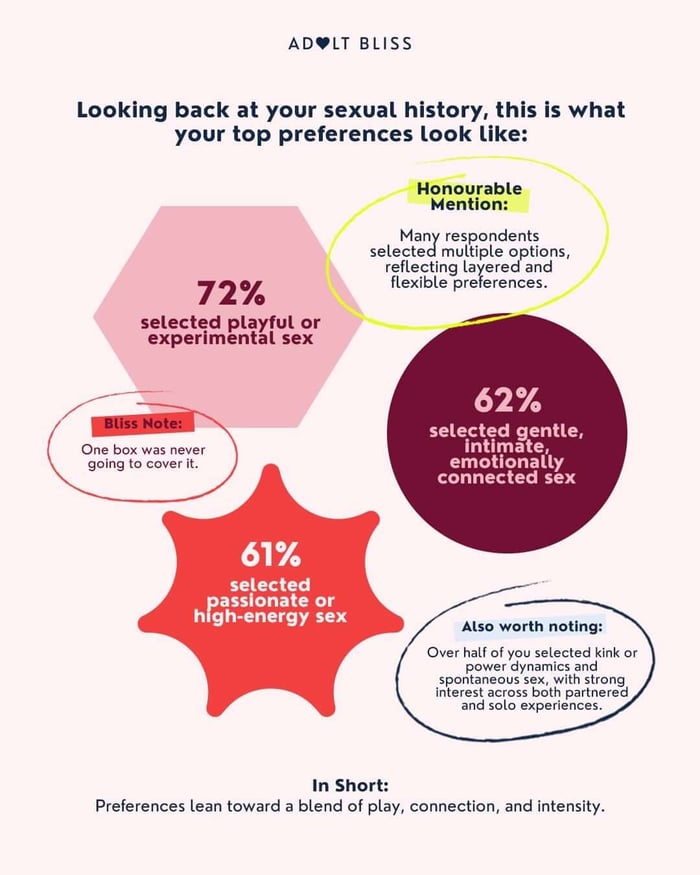 What stands out most is not one single dominant preference — it’s diversity.
People are not choosing just one style. The overlap between; Playfulness, Emotional intimacy, Passion, Kink, and Spontaneity.
…suggests most respondents enjoy multiple modes of sexuality, depending on context, partner, and stage of life.
Sex isn’t being boxed in. It’s layered.
Playful or experimental sex — (72.2%)
Gentle, intimate, emotionally connected sex — (62.9%)
Passionate or high-energy sex — (60.8%)
Kink or power-based dynamics — (55.7%)
Spontaneous or unplanned sex — (52.6%)
Sex focused on pleasure rather than performance — (47.9%)
Partnered sexual experiences — (44.3%)
Sensory-based experiences — (39.2%)
Sex focused on connection rather than outcome — (36.6%)
Solo sexual experiences — (33%)
Planned or intentional sex — (32.5%)
Routine or familiar sex — (22.2%)
I’m still figuring this out — (9.8%)
How Kinky Are You?
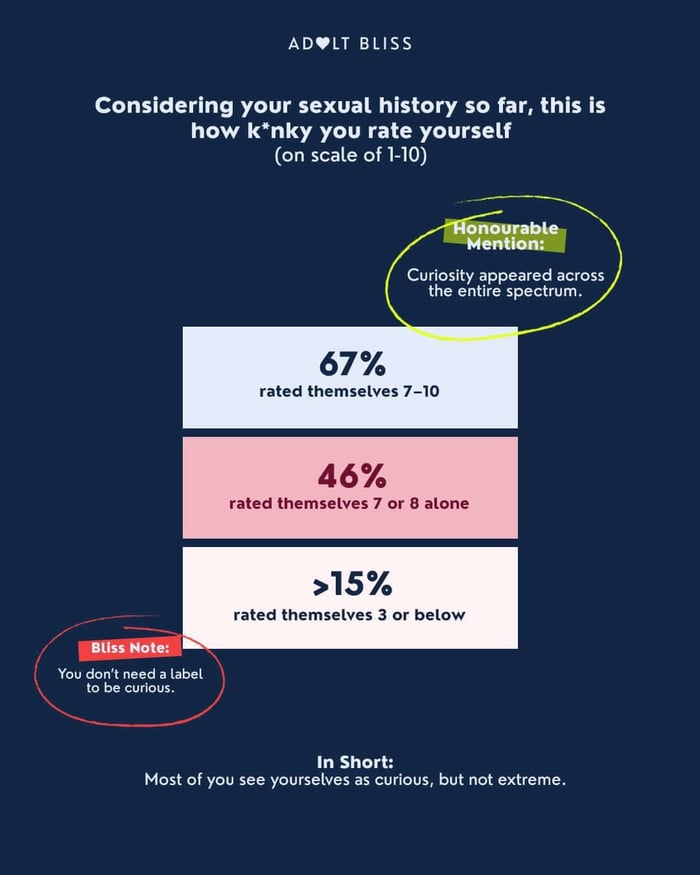
The Raw Breakdown (Self-Rated 1–10 Scale)
1 — 2 responses (1%)
2 — 4 responses (2.1%)
3 — 8 responses (4.1%)
4 — 10 responses (5.2%)
5 — 20 responses (10.3%)
6 — 21 responses (10.8%)
7 — 48 responses (24.7%) ← highest
8 — 43 responses (22.2%)
9 — 23 responses (11.9%)
10 — 15 responses (7.7%)
When paired with the previous question (where 55.7% preferred kink or power-based dynamics), this data reinforces something interesting:
People may not always choose kink as their primary style of sex…
But they still identify as somewhat kinky.
That suggests kink is becoming integrated into broader sexual identity, is now considered less taboo, more fluid, less “all or nothing”
Most people aren’t saying, “I live in a dungeon.” they’re saying, “Yeah, I’ve got a little spice.”
Pleasure Intentions, Whats Next?
Up until now, we’ve explored what people have preferred and how they identify sexually. But this next part of the survey moves from reflection to intention for pleasure priorities.
It’s not about what people have done.
It’s about what they want next.
New Kinks and Curiosities
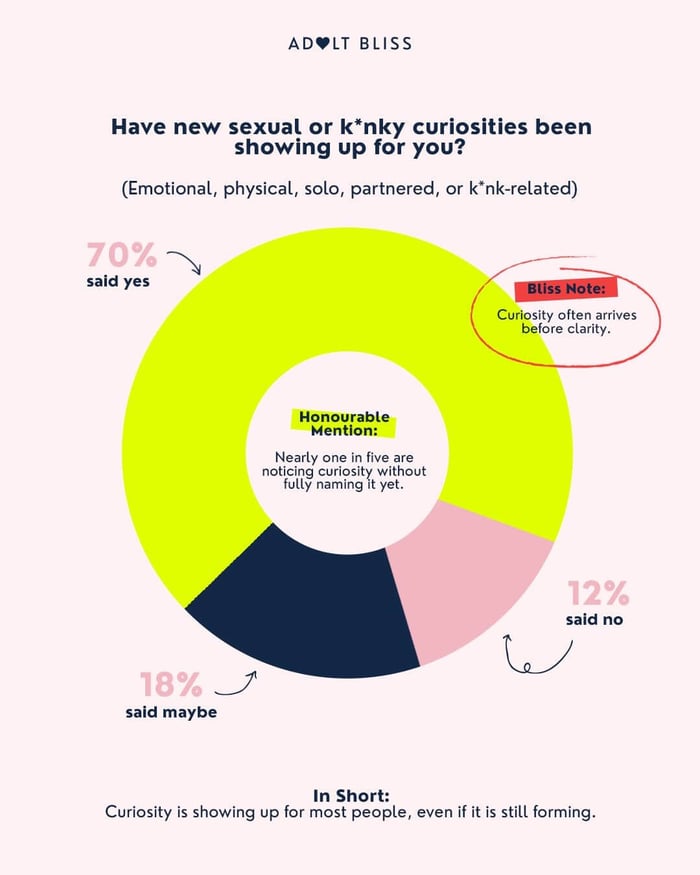
When you combine this with earlier data:
- High preference for playfulness and experimentation
- High self-rated kink levels
- Strong interest in pleasure-focused sex
A pattern emerges:
People aren’t done exploring their pleasure priorities.
They may already feel moderately or highly kinky, they may already enjoy playful sex but they’re still curious about what else is possible. And that curiosity isn’t just physical, the survey explicitly included emotional, solo, partnered, and kink-related areas.
Desire is broadening, not narrowing.
What Are We Exploring This Year?
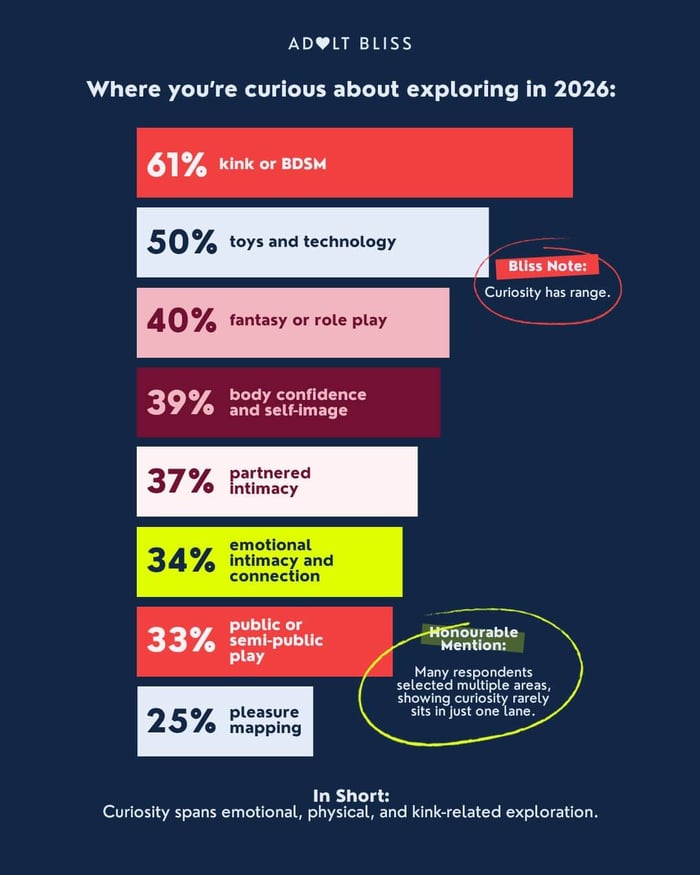
Here’s where it becomes powerful.
If 92.8% their pleasure priorities was to explore something new in 2026, and this is where that curiosity is directed. 2026 isn’t about maintenance, It’s about expansion. Here are all results from this question:
Most Selected Areas
Kink / BDSM (light or curious exploration) (60.3%)
Toys & Technology (50.5%)
Fantasy & Role Play (40.7%)
Body Confidence & Self-Image (39.2%)
Partnered Intimacy (37.6%)
Emotional Intimacy & Connection (34.5%)
Public Play (app-compatible / semi-public) (33%)
Mid-Range Curiosity Areas
Pleasure Mapping (25.3%)
Solo Pleasure (23.7%)
Wax Play (20.6%)
Clamps / Pain Play (20.6%)
Scheduling Sex / Pleasure (17.5%)
Consent & Communication (17%)
Electro Stimulation (15.5%)
Temperature Play (11.3%)
Tickling (5.2%)
Individual Write-Ins
Being Bi
Group play
Cucking
Servitude
Power dynamics (specific mention)
Exhibitionism / group activity
Electro stim, knife play
Group sex / casual sex
Intimacy (general)
Threesome with other guys
Swinging
Edge play
Overcoming childhood sexual trauma
Want to get back to sex in general
Fetish around watersports
“I can only select one option”
More extreme than light BDSM
Bucket List Highlights: What’s Really Coming Up
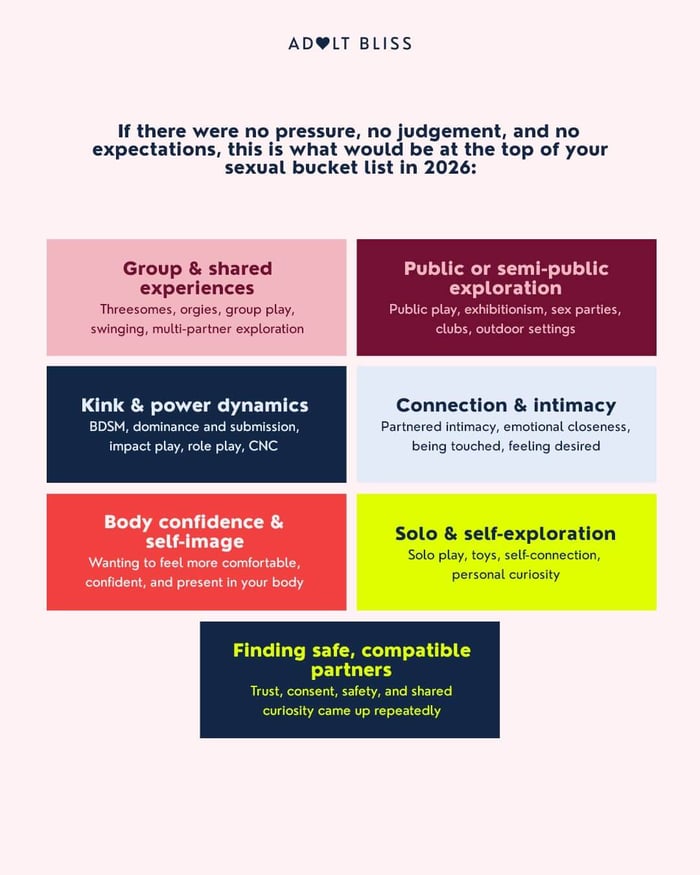
When participants were asked what would be number one on their sexual bucket list, with no pressure, no judgement, no expectations, some very clear patterns emerged.
Group & Multi-Partner Play Leads
The most common theme by far was some form of:
Threesomes (MFM, FFM, MMF)
Orgies
Group sex
Swinging
Sex clubs and parties
Gang-bang-style or multi-partner scenarios
Group dynamics are not fringe in this audience. They’re front and center.
Kink & Power Dynamics Run Deep
Not just light experimentation, many responses referenced:
24/7 TPE or collared dynamics
CNC and fear play
Heavy bondage and immobilization
Servitude and lifestyle submission/dominance
Impact, degradation, and edge play
For some, this isn’t curiosity. It’s identity-level exploration.
Public Play & Exhibitionism Are Strong
Repeated mentions of:
Public or semi-public sex
Being watched
Exhibition-style play
Glory holes, saunas, woods, parties
There’s a clear interest in risk, visibility, and pushing social boundaries.
Pegging, Prostate & Gender Exploration
Another strong pattern included:
Pegging
Prostate play
Bi MMF scenarios
Exploring bisexuality
Trans and gender-fluid dynamics
Curiosity around masculinity and fluidity is very present.
And Then There’s the Quiet Stuff
Among all the intensity, some responses stood out for their vulnerability:
“I’d just like to be touched again.”
Body confidence and self-image
Reconnecting after trauma
Being able to orgasm with a partner
Finding a safe, sexually compatible partner
Learning to stay present instead of dissociating
For some, the bucket list isn’t bigger — it’s safer.
The Overall Pattern
The loudest fantasies involve expansion — group play, kink, power, taboo.
But woven through the list is something equally important: a desire for connection, safety, and confidence.
2026 doesn’t look like a year of maintenance. It looks like a year of growth in intensity, identity, and emotional depth.
Whats Getting In The Way?
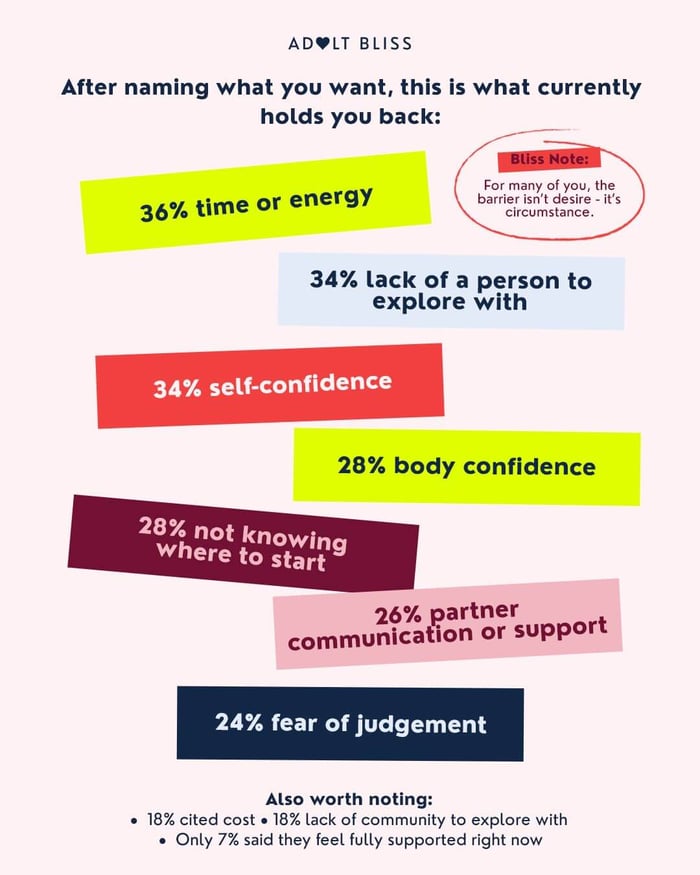
For most people, the barrier isn’t desire, It’s circumstance.
Time and energy sit at the top of the list. That tells us something important. Even with 92.8% wanting to explore something new, real life is getting in the way.
That shifts how we think about showing up.
What This Means For Us
If time and energy are the biggest blockers, then access matters more than intensity. Yes, workshops are popular. But not everyone can make it in person.
So the question becomes:
How Can We Deliver Support?
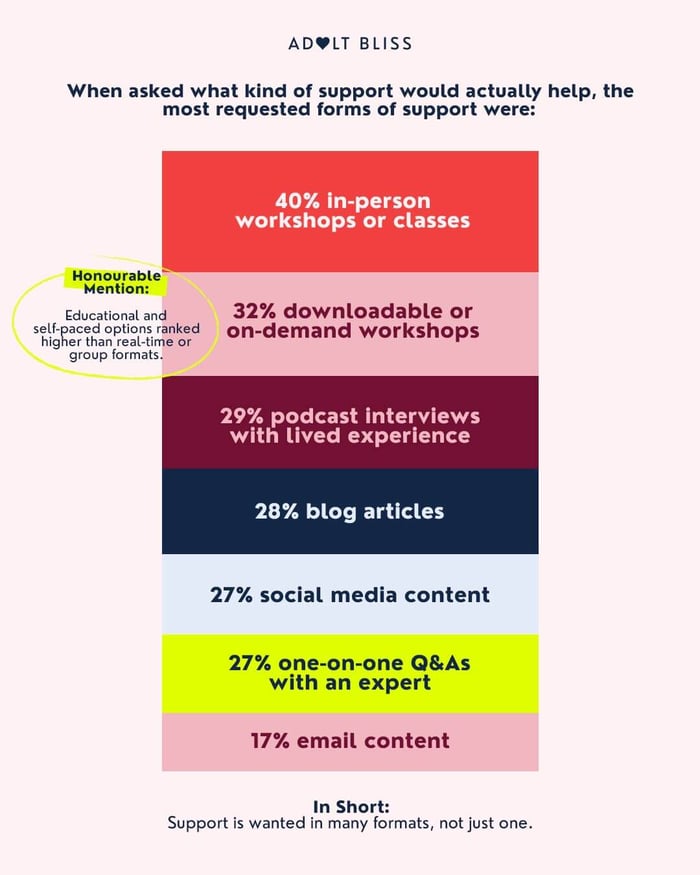
Workshops: You Want Them, Great!
Workshops ranked highest, which is great news because we’re already expanding our workshop offerings and frequency.
This tells us:
You value real, embodied learning.
You want guided exploration.
You want community.
That commitment isn’t going anywhere.
On-Demand & Downloadable Content: Discreet and Flexible
With 32% asking for downloadable or on-demand workshops, flexibility matters.
This aligns directly with the biggest barrier we saw earlier: time and energy.
So yes — building an affordable, accessible video library is on the cards. Self-paced, discreet, practical.
Education that fits into real life.
Podcasts & Interviews: Real Stories Matter
Podcast interviews with lived experience ranked strongly.
That tells us you don’t just want theory — you want:
Stories
Relatability
Nuance
Real people navigating real dynamics
We won’t over commit publicly just yet… but let’s just say it’s on our radar.
Blog, Social & Email: Depth Over Noise
Blog articles ranked higher than social media and email.
That’s important.
It suggests people want depth, not just scrollable snippets.
Email remains valuable, but we’re conscious that inbox fatigue is real. Our current split is under 25% promotional and the rest educational, and we can likely lean even further into that commitment, making sure or education content it more digestible and accessible!
Social media has reach, but it also has restrictions. If you want transparent, uncensored education, we may need to explore platforms outside of Meta to provide it.
Representation in Conversations about Pleasure
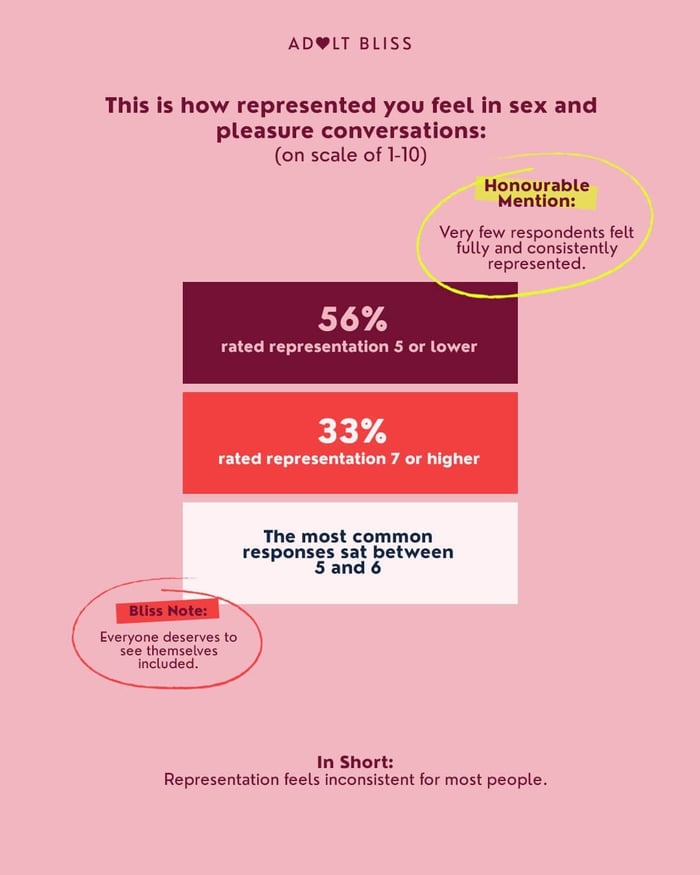
Representation is important, and this is something we are really conscious of when we are creating content.
Unfortunately there is a lot of exclusion when it comes to pleasure, this exclusion happens for demographics intersection all walks of life, gender, race, culture, disabilities, age, you name it.
We actually think that representation is the most important thing when it comes to pleasure. People want to feel like its possible for them, other wise why bother even trying?
What Your Pleasure Priorities Told Us
If there’s one thing this year’s Pleasure Priorities survey made clear, it’s this:
You’re not lacking desire.
You’re lacking time, energy, confidence, and support.
Nearly everyone wants to explore something new in 2026. Kink, group play, deeper intimacy, better communication, more confidence. The curiosity is there. The appetite is there.
What’s needed is access.
Your Pleasure Priorities showed us that growth doesn’t just mean “more extreme.” For some, it means expanding into new dynamics. For others, it means reconnecting after trauma, finding a safe partner, or finally feeling confident in your own body.
And when we asked how we can help, you told us clearly:
Keep the workshops coming.
Make education more flexible.
Offer discreet, self-paced options.
Share real stories.
Provide guidance without judgement.
So that’s the direction.
Your Pleasure Priorities aren’t about pressure. They’re about permission — to explore on your own terms.
And our role? To make that exploration safer, simpler, and more supported.
2026 isn’t about reinventing your sexuality. It’s about backing it properly.
Let’s get to work.
FAQs
What are Pleasure Priorities?
Pleasure Priorities refer to the areas of sexuality, intimacy, and exploration that matter most to you right now. In this survey, they included things like kink, connection, toys, confidence, and communication.
What did the Pleasure Priorities survey reveal?
The survey showed that most people are curious to explore something new in 2026. Kink, toys and technology, group play, and deeper intimacy ranked highly, while time, energy, and confidence were the biggest barriers.
What is the biggest barrier to exploring Pleasure Priorities?
The top barrier was time and energy, followed closely by lack of a person to explore with and self-confidence. For most people, desire isn’t the issue — circumstance is.
Are people satisfied with their current sex lives?
Many participants expressed curiosity about expanding or evolving their sex lives. While satisfaction varies, the overwhelming majority want growth, not stagnation.
What kinds of support help people achieve their Pleasure Priorities?
In-person workshops ranked highest, followed by downloadable or on-demand content, podcasts with lived experience, and educational blog articles. People want flexible, judgement-free learning options.
Is kink becoming more mainstream?
Based on the Pleasure Priorities data, yes. A large percentage of respondents rated themselves moderately to highly kinky and expressed interest in exploring kink or BDSM further.
Do Pleasure Priorities only focus on extreme or kinky interests?
Not at all. While kink and group dynamics were common themes, many participants prioritised body confidence, emotional intimacy, healing, communication, and feeling supported.
How can I identify my own Pleasure Priorities?
Start by asking yourself what you’re curious about right now — emotionally, physically, or relationally. Notice where you feel excitement, hesitation, or longing. Your Pleasure Priorities often show up as quiet curiosity before clear definition.